How to Fix Utah Clay Soil
Why our alkaline clay drowns roots — and the amendment plan that actually works (hint: not sand).
8 min read · Updated June 25, 2026
If your plants sulk, your water pools, and digging feels like cutting into a brick, you're meeting the Wasatch Front's defining challenge: dense, alkaline clay. The good news is that clay is fixable — and the fix is simpler and cheaper than most people think, as long as you don't reach for the one amendment that makes it permanently worse.
7.5–8.5
Typical Utah soil pH (alkaline)
8–12 in
Depth to amend with compost
2–3 in
Compost layer to incorporate
Never
Add sand to clay — it sets like concrete
Why alkaline clay drowns roots
Clay isn't bad soil — it's actually rich in minerals and holds nutrients well. The problem is physical structure. Clay particles are so small and pack so tightly that water and air barely move through them. After a rain or a deep watering, the spaces that should hold oxygen stay flooded, and roots that can't breathe rot or simply refuse to grow.
On top of that, Wasatch Front clay is alkaline — pH commonly 7.5 to 8.5. High pH chemically locks up iron and other micronutrients even when they're present in the soil, which is why so many plants here yellow out. That problem deserves its own treatment; see our guide to iron chlorosisfor the why and the fix. And it's why certain acid-loving favorites simply can't survive here no matter how you feed them — our list of plants that fail in Utah covers the worst offenders and the swaps that thrive.
The sand trap (and the gypsum myth)
Gypsum gets recommended constantly for "breaking up" clay, but it only helps a specific kind of clay — sodic soil, where excess sodium has collapsed the structure. Most Utah clay isn't sodic; it's just compacted and high-pH. On normal Wasatch clay, gypsum does very little for structure. A simple soil test (USU Extension runs an affordable one) tells you whether sodium is actually a factor before you spend money on it.
The amendment plan that works
The goal is to add organic matter and open pore space across the entire root zone — not just the planting hole. Amending only the hole creates a "bathtub": water collects in the loose pocket, surrounded by impermeable clay, and drowns the very plant you were trying to help.
Test and time it
Check pH and texture with a USU Extension soil test. Work clay when it's lightly moist — never when it's wet (you'll smear and compact it) or bone-dry (it won't break).De-compact
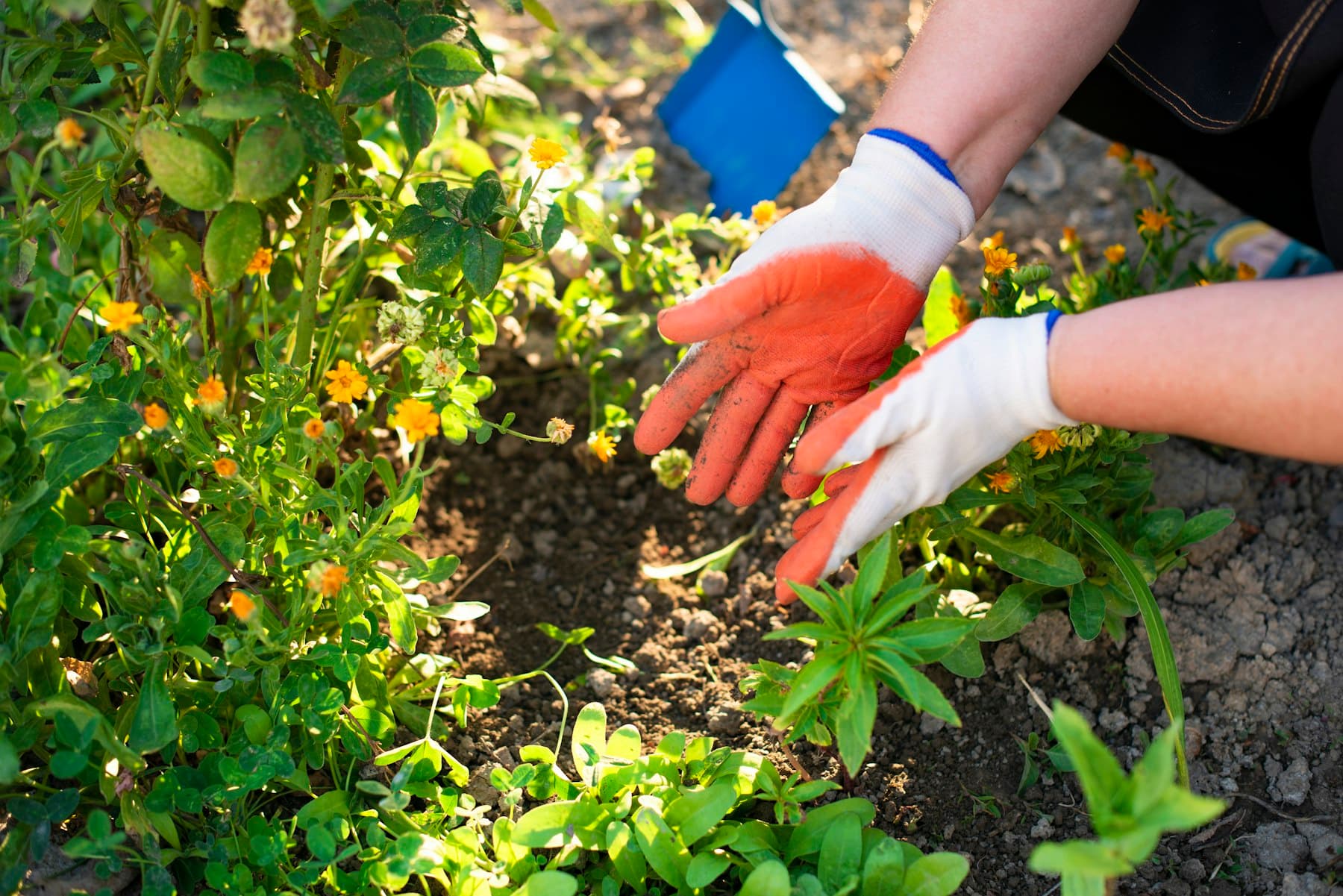
Loosen the top 8–12 inches with a broadfork or single-pass tilling. On builder lots especially, break the compaction layer the equipment left behind so roots and water can get through.Add compost
Spread 2–3 inches of quality compost or aged organic matter across the whole bed, not just where each plant goes.Incorporate
Work the compost into the loosened soil so it blends with the clay rather than sitting as a separate layer. One thorough mixing for a new bed is enough — avoid repeated tilling, which destroys structure over time.Plant to native grade
Set trees and shrubs at the same level they grew in the pot, roughing up the sides of the hole so roots don't circle in a slick clay wall.Mulch and maintain
Top with 3 inches of mulch (kept off trunks) and top-dress with compost each year. Earthworms and roots keep improving structure with no more tilling.
When to give up and build up
Some plants will never be happy in amended alkaline clay — acid-lovers and anything that demands sharp drainage. For those, stop fighting the native soil and build raised beds or berms filled with a quality, well-draining soil mix where you control both pH and drainage. This is the right call for blueberries, most vegetables, and fussy ornamentals. For the broad category of adapted Utah trees, shrubs, perennials, and grasses, amended native grade is both cheaper and better for long-term root establishment.
A realistic timeline
Clay improves gradually, not overnight. The first season after amending you'll see better infiltration and easier digging; over two to three seasons of annual top-dressing and mulch, the soil darkens, softens, and starts to hold the open, crumbly structure that good beds have. Patience and organic matter beat any miracle product.
Fixing Utah clay soil FAQ
Can I just add sand to break up Utah clay soil?
Does gypsum fix Utah clay?
How deep should I amend, and how much compost?
Should I build raised beds instead of fixing the clay?
Why does water pool on my Utah clay soil?
Horticulture and timing guidance per USU Extension. Verified June 2026.
Who publishes this guide
This site is researched and published by Xperience Landscaping, a landscaping company based in Midvale, UT serving the Salt Lake Valley & Utah County. We write it because we install this work every week — and because no one had pulled Utah's scattered, often-outdated landscaping information into one honest place. Figures are verified against primary sources and dated; we'll always tell you to confirm a rebate or code with your district or city before you rely on it.
Keep reading
Know-How
When to Plant in Utah: A Month-by-Month Calendar
Frost dates, soil temps, and the right window for trees, perennials, bulbs, and seed on the Wasatch Front.
7 min read
Know-How
Drip Irrigation Basics for Utah Yards
Why drip is the backbone of every water-wise Utah yard — and a rebate prerequisite — explained simply.
8 min read
Know-How
Iron Chlorosis: Why Utah Leaves Turn Yellow
Yellow leaves with green veins? It's our alkaline soil locking out iron. Here's the real fix, short- and long-term.
6 min read
From the team behind this guide
Ready to build it?
This guide is published by Xperience Landscaping, a landscaping company serving the Salt Lake Valley & Utah County. If you want a real plan and a quote for your yard, we're happy to help.