Drip Irrigation Basics for Utah Yards
Why drip is the backbone of every water-wise Utah yard — and a rebate prerequisite — explained simply.
8 min read · Updated June 25, 2026
In a state this dry, how you deliver water matters as much as how much you use. Drip irrigation is the quiet backbone of every water-wise Utah yard — and, for most turf-removal rebates, a hard requirement you can't skip. Here's how it works, what counts as "drip," and how to keep it alive through a Utah winter.
At the root
Drip waters soil, not air or pavement
Required
True drip is a prerequisite for most rebates
Own zone
Never mix drip with spray heads
Blow out
Drain before the first hard freeze
Why drip is the backbone
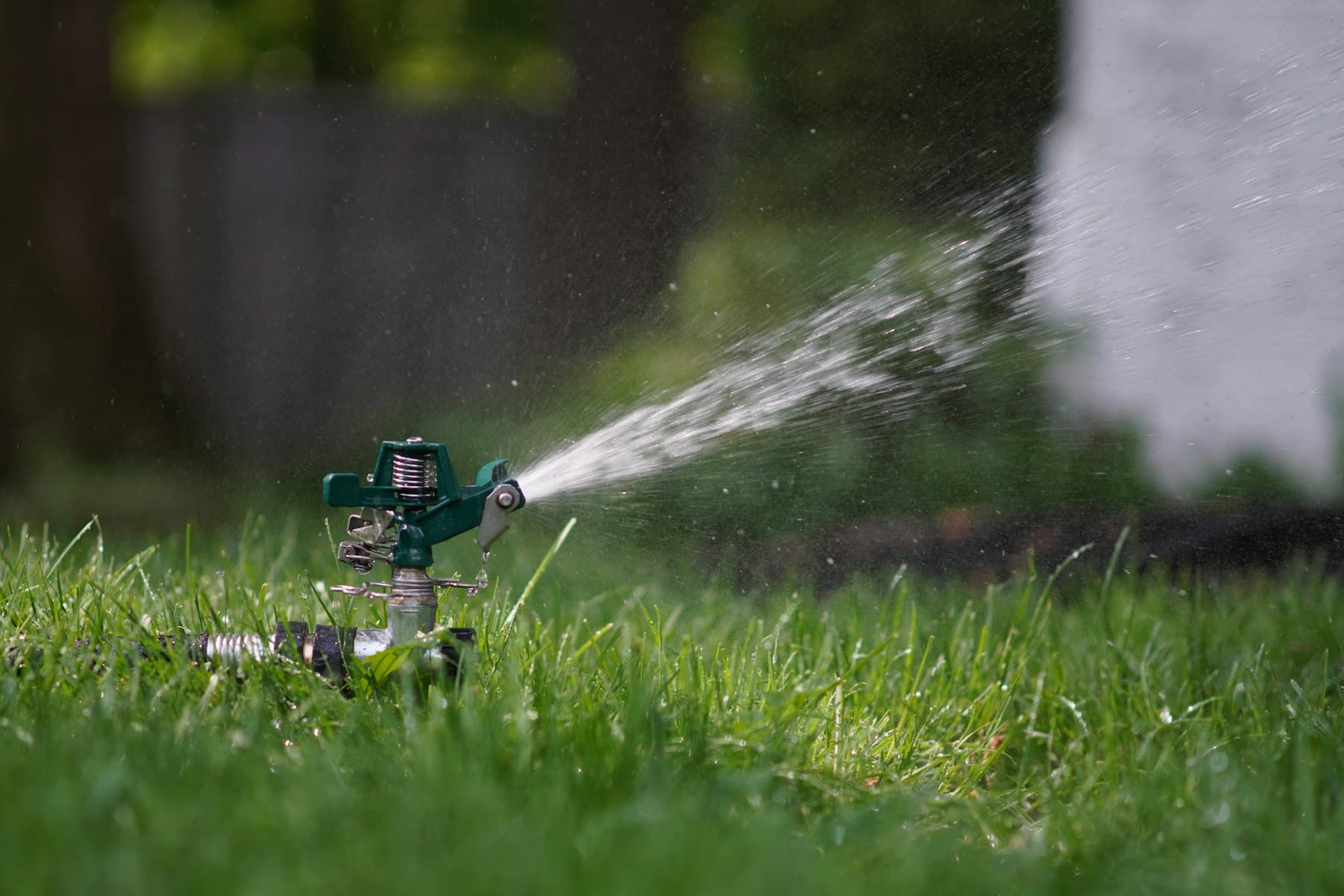
Overhead spray was built for cool, humid climates — not Utah. In our hot, windy, dry summers a large share of sprayed water evaporates or drifts before it ever hits the ground, and what lands often wets leaves and sidewalks instead of roots. Drip flips that: low-flow emitters release water slowly, directly at the soil surface over the root zone, so nearly all of it infiltrates.
That efficiency pairs perfectly with the deep-and-infrequent watering our clay soil wants — see mulch and wateringfor the schedule. And because it's so much more efficient, drip is the method Utah water districts want to see when they pay you to rip out lawn.
Drip is a rebate prerequisite
Emitters vs. micro-spray, and how a zone goes together
A drip zone is simple once you see the parts. From the valve, water passes through a filter (keeps emitters from clogging) and a pressure regulator (drip runs at much lower pressure than spray — usually around 25–30 psi), then into distribution tubing that feeds either inline emitter tubing or individual point-source emitters at each plant.
| Type | How it applies water | Rebate-eligible? |
|---|---|---|
| Point-source / inline drip emitters | Slow drip at the soil surface, root-zone targeted | Yes — the standard |
| Micro-spray / micro-sprinkler | Fine spray over a small radius — still loses to evaporation | Usually no |
| Bubbler | Floods a small basin quickly | Usually no |
| Soaker hose | Seeps along the hose; uneven, short-lived | Usually no |
Setting it up right
Zone by water need
Group plants with similar water needs on the same zone, and keep all drip on its own valves — never share a zone with lawn spray heads, which run on a completely different schedule.Add a filter and pressure regulator
Every drip zone needs both. The filter prevents clogged emitters; the regulator drops pressure to drip range so fittings don't blow apart.Match emitters to plants
Give bigger plants more emitters or higher flow; space inline tubing to wet the whole root zone. As shrubs and trees grow, add emitters at the expanding drip line.Install a smart controller
A WaterSense-labeled controller adjusts run times to real weather instead of a fixed clock — high-value in Utah, and sometimes rebated.Mulch over the lines
Cover drip tubing with about 3 inches of mulch to cut evaporation further and protect the lines from UV and heat.
Winterizing: blow it out before the freeze
Drip components are thin-walled and full of small passages, so trapped water that freezes will crack them. Before the first hard freeze — typically mid-to-late October on the Wasatch Front — shut off the water, drain the backflow preventer, and blow out the lines with compressed air at a safe pressure. In spring, do a start-up walk: pressurize each zone, watch for failed or clogged emitters, and replace them before plants show stress. Our month-by-month maintenance calendarputs both the blow-out and the spring start-up on the calendar so you don't miss them.
Drip irrigation FAQ
Why is drip irrigation so important in Utah?
Do soaker hoses and micro-spray count as drip for a rebate?
How do I keep drip lines from freezing in winter?
Should drip and lawn sprinklers be on the same zone?
Will a smart controller really save water in Utah?
Horticulture and timing guidance per USU Extension. Verified June 2026.
Who publishes this guide
This site is researched and published by Xperience Landscaping, a landscaping company based in Midvale, UT serving the Salt Lake Valley & Utah County. We write it because we install this work every week — and because no one had pulled Utah's scattered, often-outdated landscaping information into one honest place. Figures are verified against primary sources and dated; we'll always tell you to confirm a rebate or code with your district or city before you rely on it.
Keep reading
 Cornerstone
Know-How
How to Fix Utah Clay Soil
Why our alkaline clay drowns roots — and the amendment plan that actually works (hint: not sand).
8 min read
Know-How
When to Plant in Utah: A Month-by-Month Calendar
Frost dates, soil temps, and the right window for trees, perennials, bulbs, and seed on the Wasatch Front.
7 min read
Know-How
Iron Chlorosis: Why Utah Leaves Turn Yellow
Yellow leaves with green veins? It's our alkaline soil locking out iron. Here's the real fix, short- and long-term.
6 min read
From the team behind this guide
Ready to build it?
This guide is published by Xperience Landscaping, a landscaping company serving the Salt Lake Valley & Utah County. If you want a real plan and a quote for your yard, we're happy to help.