Park-Strip Conversion (Utah's New Rules)
New lawn is now banned in many Utah park strips. What you can plant, what the rebate pays, and how to do it right.
9 min read · Updated June 25, 2026
The park strip — that narrow band of ground between your sidewalk and the curb — has quietly become the most regulated piece of your Utah yard. New lawn is now restricted or banned in many cities, artificial turf is outright illegal in places like Salt Lake City, and yet it's also the single easiest spot to earn a turf-removal rebate. Here's what you can actually plant, what the rebate pays, and how to convert it without running afoul of the rules.
Banned
Artificial turf in SLC park strips
$2–$3
Rebate per sq ft (state base, stacks w/ district)
Exempt
Park strip often exempt from the 200 sq ft minimum
Up to $200
Per-day SLC fine for prohibited turf
Why the rules changed
The park strip is the worst lawn on any Utah lot. It's narrow, sun-baked, hemmed in by hot concrete on both sides, and almost impossible to irrigate efficiently — spray heads overshoot onto the sidewalk and street, sending drinking water straight to the gutter. As the Wasatch Front pushed hard on conservation, cities zeroed in on the strip first: it's the highest-waste, lowest-benefit turf in the public eye.
Statewide, the conservation push has been real — roughly 3,000,000 square feet of lawn replaced in 2024 alone, with $7 million paid out in rebates. Park strips are a big part of that, because they're where new turf is now blocked and removal is most generously rewarded.
What you can't do anymore
New natural grass is also restricted or discouraged in many cities' park strips, and rebate districts won't pay you to replace grass with more grass — grass-to-grass conversions are explicitly excluded. Rules differ by municipality and change often, so confirm the current ordinance with your city's planning or water department before you plant or remove anything.
What you can plant
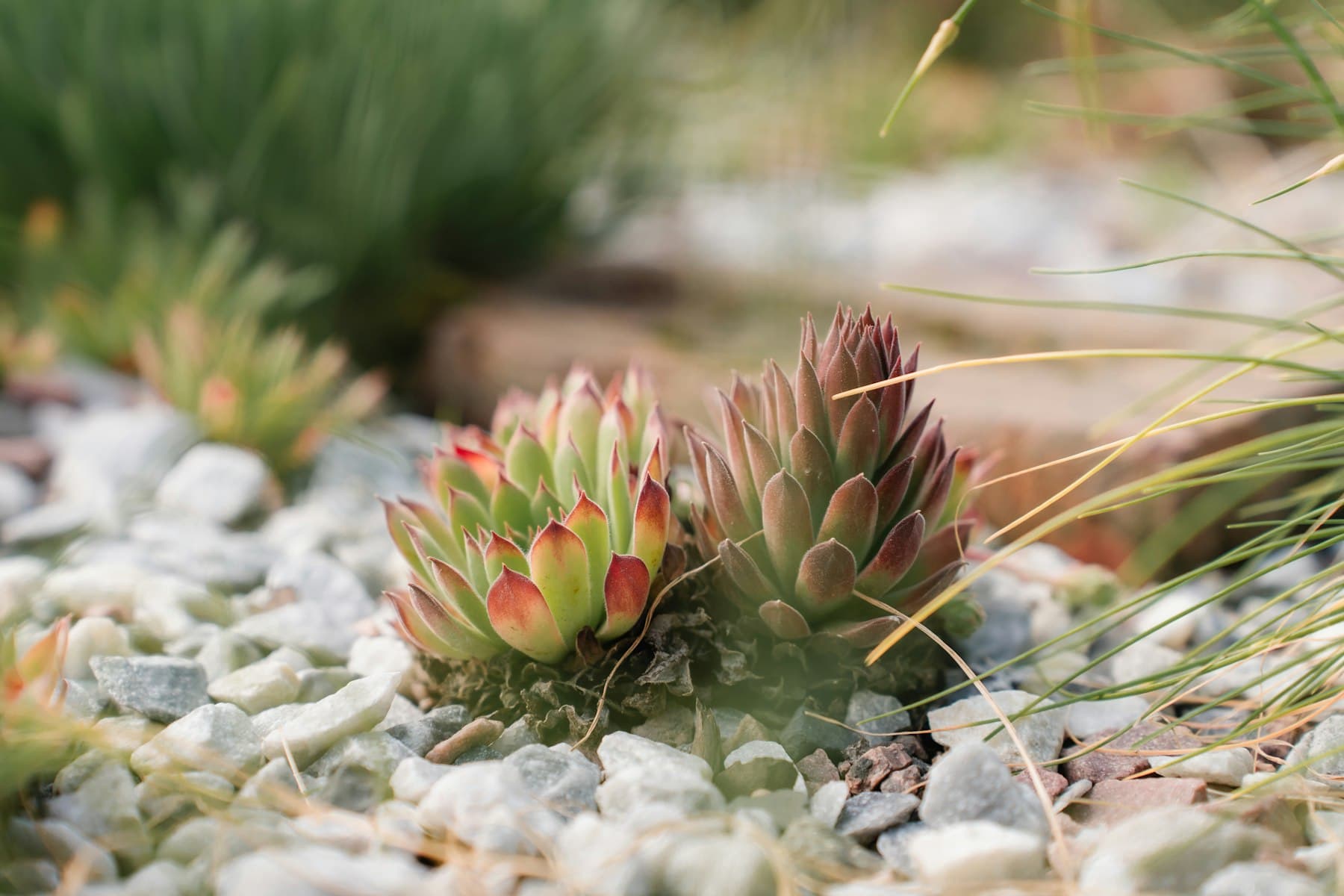
Plenty — and it'll look better and cost less to keep than the lawn it replaces. The winning formula is a layer of water-wise plants over mulch or decorative rock, all fed by drip irrigation rather than spray. Our water-wise perennials for Utah list is built for exactly these hot, narrow conditions.
| Layer | Good choices | Why it works in the strip |
|---|---|---|
| Ground plane | Mulch, decorative gravel, or decomposed granite | Suppresses weeds, holds moisture, no mowing in a tight space |
| Low plantings | Water-wise perennials, ornamental grasses, low shrubs | Tolerates reflected heat; stays below sightline near sidewalks |
| Trees | Only city-approved street trees, properly spaced | Shade and canopy value without lifting the sidewalk or fouling lines |
| Irrigation | Drip / inline emitter tubing | No overspray onto concrete; rebate programs require it over spray |
Mind the sightlines and the sidewalk
The park strip is public right-of-way, so design has limits beyond plant choice. Keep plantings low near intersections and driveways so you don't block driver or pedestrian sightlines, leave the sidewalk and any curb access clear, and check your city's approved-tree list and spacing rules before planting anything that will grow tall. Mounding a strip too high or fencing it off is a common way to get a correction notice — keep it open, low, and walkable.
Claim the rebate — but in the right order
This is where homeowners leave money on the table. Every Utah rebate program requires a pre-approval site visit before you remove the grass — tear it out first and you forfeit the payout. The state base pays about $2.00 per square foot, and districts like JVWCD and CUWCD stack to roughly $3.00. Crucially, the 200-square-foot statewide minimum is commonly waived for the park strip, so even a small conversion can qualify.
Confirm your city's rules
Call planning or the water department: is new grass restricted, is turf banned, what trees are approved? Get this before you design.Book the pre-removal site visit
Apply through your district (utahwatersavers.com) and pass the site visit BEFORE any grass comes out. This is non-negotiable for the rebate.Remove turf & install drip
Strip the sod, prep the soil, and run drip / inline emitter tubing — spray irrigation generally won't qualify.Plant low and water-wise
Add perennials, grasses, and approved trees over mulch or rock, keeping sightlines and the sidewalk clear.Submit for payout
Document the finished conversion per your district's requirements and claim the per-square-foot rebate.
For the per-district rates, caps, and the exact qualifying rules, see our Utah water rebate guide — it breaks down JVWCD, CUWCD, Weber Basin, and WCWCD individually, since the numbers and minimums differ by where you live.
Park-strip conversion FAQ
Can I still put grass in my Utah park strip?
Is artificial turf allowed in a Salt Lake City park strip?
Does the turf-removal rebate work for a park strip?
What can I plant in a Utah park strip instead of lawn?
Who is responsible for maintaining the park strip — me or the city?
Rebate rates, caps, and minimums per utahwatersavers.com and the respective conservancy districts; statewide results per water.utah.gov. Salt Lake City artificial-turf ordinance (Ch. 21A.48, March 2024 amendment) and enforcement timeline per city records. Park-strip turf restrictions and maintenance responsibility vary by municipality and change over time — confirm current rules with your city. Verified June 2026.
Who publishes this guide
This site is researched and published by Xperience Landscaping, a landscaping company based in Midvale, UT serving the Salt Lake Valley & Utah County. We write it because we install this work every week — and because no one had pulled Utah's scattered, often-outdated landscaping information into one honest place. Figures are verified against primary sources and dated; we'll always tell you to confirm a rebate or code with your district or city before you rely on it.
Keep reading
 Cornerstone
Projects
New-Construction Landscaping in Utah
Bare-dirt lot in Eagle Mountain, Saratoga Springs, or Lehi? The pre-occupancy deadlines, phasing order, and soil step builders skip.
12 min read
Projects
Front-Yard Makeovers in Utah
The highest-return yard project in Utah: curb appeal, water savings, and a sequence that keeps it on budget.
8 min read
Projects
Backyard Outdoor Living: Patios, Pergolas & Fire
Patios, pergolas, fire features and outdoor kitchens — the Utah build details (frost depth, drainage) that make them last.
10 min read
From the team behind this guide
Ready to build it?
This guide is published by Xperience Landscaping, a landscaping company serving the Salt Lake Valley & Utah County. If you want a real plan and a quote for your yard, we're happy to help.