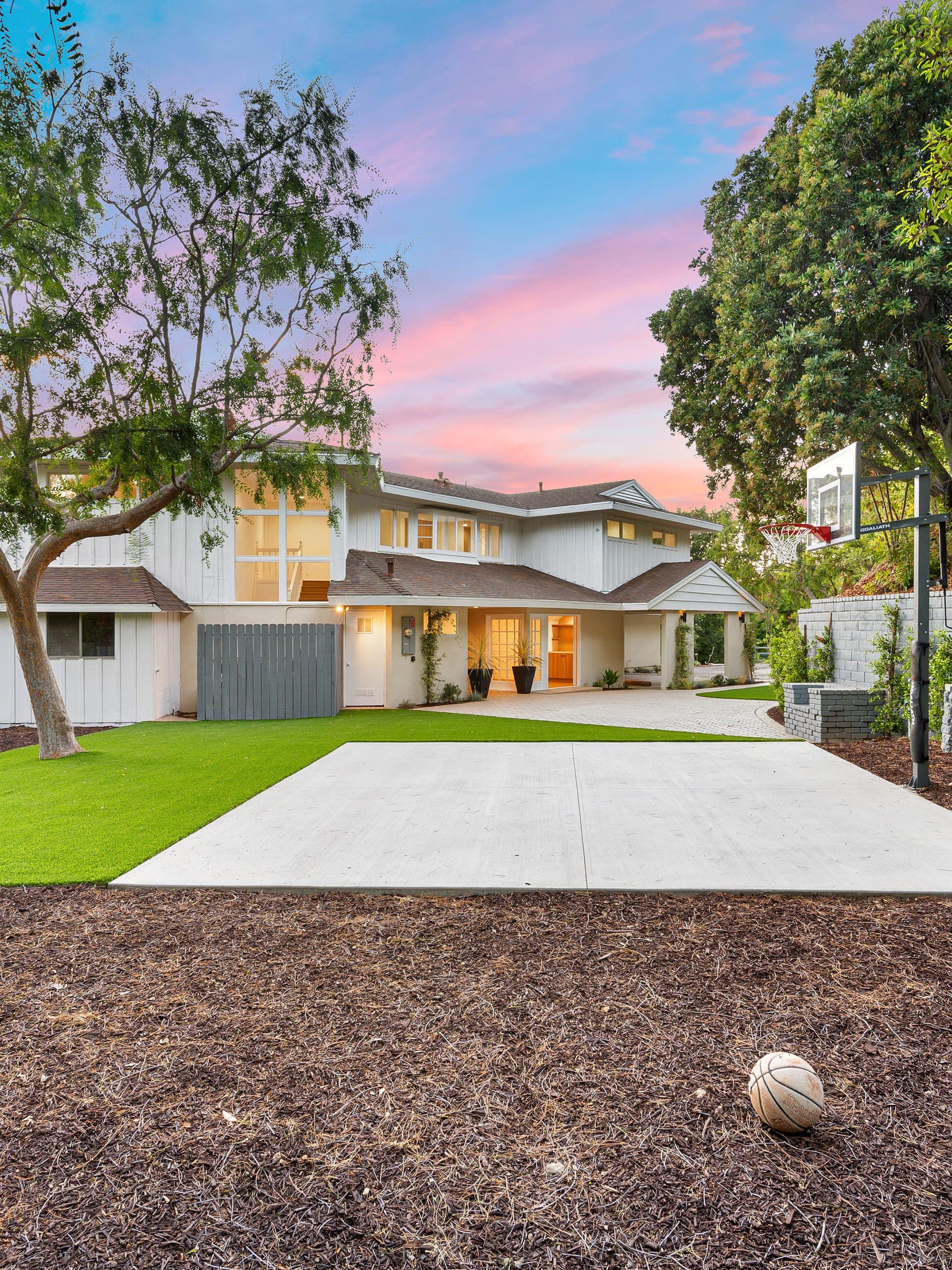
Water Features & Pools in a Cold Climate
Ponds, fountains, and pools that survive a Utah winter — freeze protection, siting, and what they really cost.
8 min read · Updated June 25, 2026
Water in the backyard — a fountain, a pond, a pool — is one of the most rewarding features you can add, and one of the least forgiving in a climate that freezes hard 50 to 80 times a winter. The difference between a feature you enjoy for decades and one that cracks its first February comes down to winterizing, siting, and burying the plumbing right. Here's how to do all three in Utah.
50–80
Freeze-thaw cycles per Wasatch winter
30–36 in
Frost line — bury charged plumbing below it
Every fall
Pools blown out; features drained & pumps pulled
$10k+
Pools: tens of thousands and up — get local bids
Cold climate first, everything else second
Water expands when it freezes, and Utah's winter cycles it through freeze and thaw 50 to 80 times. Any water trapped in a pipe, pump, or shallow basin becomes a wedge that cracks whatever holds it. That single fact should drive every decision: design so the feature can be fully shut down and drained, and never leave standing water where a freeze can reach it. This is why winterizing isn't a chore you bolt on later — it's the spec the whole feature is built around.
Plumb below the frost line
The frost line on the Wasatch Front is 30 to 36 inches. Any plumbing that stays charged through winter — a continuously circulating line, a buried supply — must run below that depth or it will freeze and split underground, the worst place to find a leak. Seasonal lines that get drained can be shallower, but the safest approach in our freeze-thaw climate is to bury permanent runs below frost and design every line so it drains completely. Trench the plumbing before any hardscape or planting goes in around the feature.
Siting that works with the lot
Site for drainage and winterizing first, view second. Keep the feature away from the foundation and out of the lowest, wettest part of the yard, give it sun if you want aquatic plants or a warmer pool, and shelter it from the harshest wind. Keep large deciduous trees back so falling leaves don't foul the water. On a bench or foothill lot, set the feature on a stable, properly drained bench rather than fighting the slope — which usually means a retaining wall.
Choosing a feature for the climate
Match ambition to how much winter work you want. The smaller and more drainable the feature, the easier it lives through a Utah winter.
| Feature | Cold-climate reality | Cost framing |
|---|---|---|
| Pondless / fountain | Lowest risk — small reservoir below grade, simple to drain & pull pump | Most accessible water feature to own |
| Pond (with fish) | Needs depth or a de-icer/aerator to overwinter safely | Scales with size, liner, and filtration |
| In-ground pool | Full fall blow-out & closing every year; heating to extend season | Tens of thousands and up — highly site-dependent |
Build order
Plan for winterizing
Design the feature so it can be fully drained and the pump removed — this constraint shapes everything downstream.Site & excavate
Place it away from the foundation, out of low wet spots, and clear of big leaf-dropping trees; on a slope, build a drained bench.Trench plumbing below frost
Run charged lines below the 30–36 in frost line and slope every line so it drains; do this before surrounding hardscape.Set basin & equipment
Install the liner/shell, pump, and filtration with freeze protection and easy seasonal access in mind.Finish & plant
Edge with stone, soften with plantings set back from the water, and confirm the full shutdown procedure before winter.
A water feature rarely stands alone — it's usually part of a larger patio-and-fire backyard. See backyard outdoor living for the patio base, frost-depth footings, and drainage rules that the surrounding hardscape needs.
Water features & pools FAQ
Do I have to winterize a water feature or pool in Utah?
How deep do water-feature pipes need to be buried in Utah?
How much does a backyard pool cost in Utah?
Where should I site a pond or pool on my lot?
What's the lowest-maintenance water feature for a cold climate?
Freeze-thaw cycle count and the 30–36 in Wasatch frost line per verified Utah build data; winterizing and below-frost plumbing per Utah cold-climate practice. No single verified Utah pool price exists on our data sheet — pool cost is framed qualitatively (tens of thousands and up) and readers are directed to itemized local bids. Verified June 2026.
Who publishes this guide
This site is researched and published by Xperience Landscaping, a landscaping company based in Midvale, UT serving the Salt Lake Valley & Utah County. We write it because we install this work every week — and because no one had pulled Utah's scattered, often-outdated landscaping information into one honest place. Figures are verified against primary sources and dated; we'll always tell you to confirm a rebate or code with your district or city before you rely on it.
Keep reading
 Cornerstone
Projects
New-Construction Landscaping in Utah
Bare-dirt lot in Eagle Mountain, Saratoga Springs, or Lehi? The pre-occupancy deadlines, phasing order, and soil step builders skip.
12 min read
 Cornerstone
Projects
Park-Strip Conversion (Utah's New Rules)
New lawn is now banned in many Utah park strips. What you can plant, what the rebate pays, and how to do it right.
9 min read
Projects
Front-Yard Makeovers in Utah
The highest-return yard project in Utah: curb appeal, water savings, and a sequence that keeps it on budget.
8 min read
From the team behind this guide
Ready to build it?
This guide is published by Xperience Landscaping, a landscaping company serving the Salt Lake Valley & Utah County. If you want a real plan and a quote for your yard, we're happy to help.